Mission autonomy
AuraNet
One mission.
Every team.
AuraNet is Dominion’s mission autonomy platform: one system to command the teams on the ground and the autonomous assets working alongside them.
Built in Canada for sovereign operations, AuraNet links soldiers, crewed vehicles and uncrewed systems across domains. Once commanders set the intent, every team — human or machine — works toward it.
Every team.
One picture.
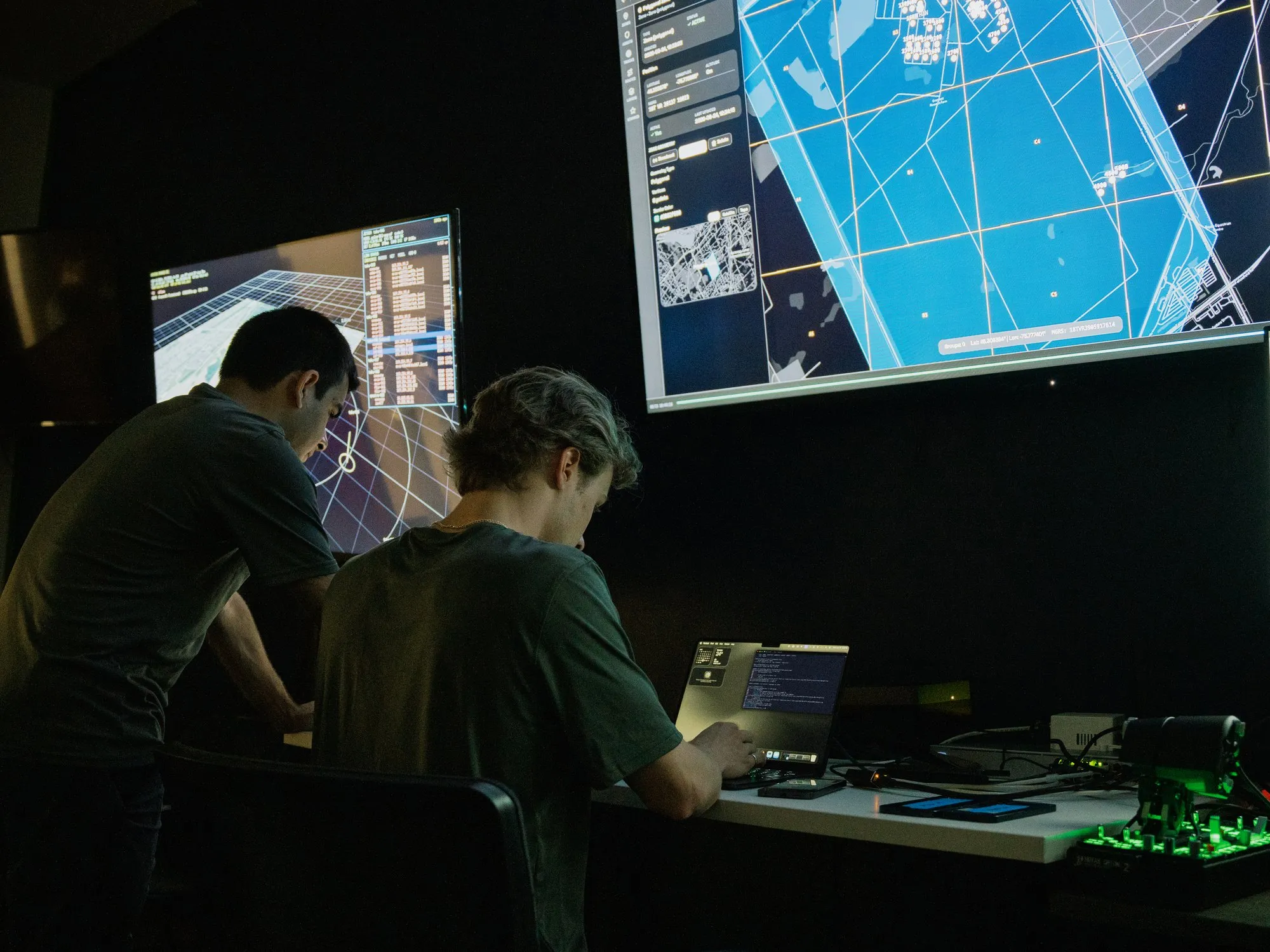
AuraNet brings soldiers on ATAK, vehicles, uncrewed systems, sensors and data feeds into a single common operating picture. From one geospatial view, commanders see where every team is and what it needs. They can then task, coordinate and track people and platforms side by side.
Any team.
One network.
AuraNet works with the kit that forces already use. ATAK devices, crewed vehicles and uncrewed systems join through the same secure P2P mesh.
Intent down.
Information up.
Commanders set mission intent and AuraNet supports its execution. Troops receive and issue tasking, routes and logistics updates on the devices they carry while uncrewed assets run and delegate sequenced missions on their own. Position, health and detection data flow back to the command post and operators can change a task mid-run or take direct control at any time.
Resilient
by design.
PACE-native: teams and assets connect multiple bearers, whether it be Mesh radios, Wi-Fi, 5G or satellite, and reroute when a link drops. Edge processing on each asset lets it detect, track and process information, even when disconnected.
The capabilities to lead human-machine teams
Command and connect
Dismounted troops on ATAK share position, chat, logistics and tasking with the command post and autonomous assets around them.
Each platform handles its own navigation and safety, while AuraNet coordinates task delegation and assets across the mission. Operators can redirect and reprioritize at any point.
Operators can query data and issue tasks in plain language to support human-computer interaction in extreme northern environments where cold, gloves and continuous movement make conventional interfaces ineffective.
Whether on the ground or in command centres, operators can draw polygons on the map to set automated alerts and actions when people, assets or detections enter or leave an area.
Every node connects directly to its peers, so the network has no single point of failure and no dependence on a central server.
Nodes switch automatically between RF, Wi-Fi, LTE and satellite links as conditions change, so operations continue across primary, alternate, contingency and emergency communications.
Users and assets are tied to a clearance and an operation, so operators only see and control what they’re authorized to.
Containerized for on-premises or cloud hosting. Runs in any modern browser or as an application.
See and understand
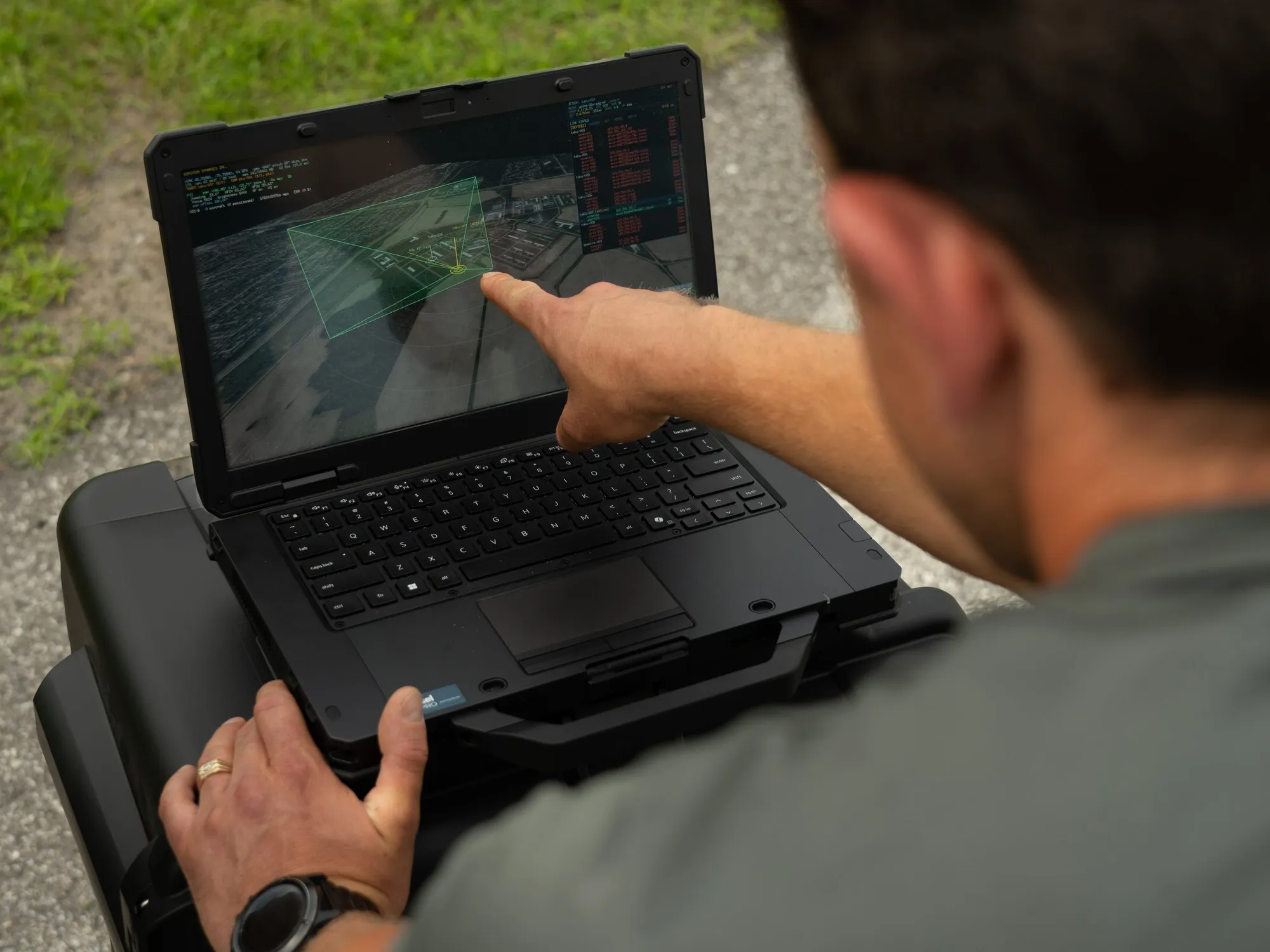
Live video and sensor data from crewed and uncrewed assets stream into the common operating picture as they are captured.
ADS-B air traffic, AIS vessel tracking, KML overlays and weather sit on the same map as your own forces.
Satellite imagery is provisioned into the operational picture for planning at the command post and for teams in the field.
Machine learning and computer vision workloads move dynamically between edge nodes and data centers, so detection and tracking run wherever compute is available. Edge hardware is rated to −50 °C.
Fuses surveillance, planning and intelligence across the find, fix, finish, exploit, analyze and disseminate cycle.
A chronological record of every asset and area for review after the mission.
Newsroom
In the news
-
Dominion Dynamics and TENCORE partner to manufacture uncrewed ground vehicles in Canada for Ukraine, adding Canadian autonomy stack
Oct 13, 2026
-
Dominion Dynamics raises $139M CAD Series A to scale Arctic surveillance network and drone systems
Jun 30, 2026
-
We deployed AuraNet in the High Arctic. Here's what we learned working with Rangers for eight weeks.
Apr 16, 2026